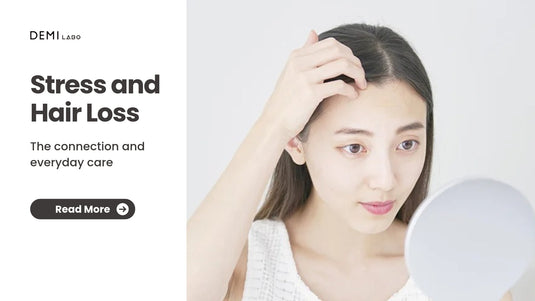
Hair Shedding and Stress: What We Know
You might notice it in the shower, on your brush or while styling your hair: more hair seems to be coming out than before. When life has been busy or stressful, it is natural to wonder whether the two are connected.
In its article on stress and hair shedding, DEMI LABO, the hair and scalp information site run by DEMI COSMETICS, notes that stress is often mentioned as a cause of hair shedding. Stress can play a part, but not all hair shedding is caused by stress. This article introduces DEMI LABO's information for salon professionals and their clients in Malaysia: what is worth knowing, what you can review day to day, and when to seek advice.

In this guide
How Stress and Hair Shedding May Be Connected

Stress can be one factor
DEMI LABO explains that stress may be one of the factors linked to an increase in hair shedding. Stress can also affect sleep, eating and daily routines, which is one reason why looking at everyday habits is part of the picture.
Stress is a normal part of life. Noticing more shedding does not mean you have done something wrong.
But not the only one
It is also important to keep things in perspective. Hair shedding can have many causes, including hormonal changes such as those after childbirth, as well as illness or other changes in health. Stress is only one possible factor, and it cannot explain every case on its own.
The timing may not match
Significant emotional or physical stress can sometimes disrupt the normal hair cycle, causing more hairs than usual to enter the resting phase. This type of increased shedding is called telogen effluvium. It often becomes noticeable a few months after the trigger, so the timing may not match the stressful period itself.
Noticing a Change in Your Hair

Many people first become aware of a change when they see more hair than usual in the shower drain, on a brush or comb, or on their pillow. DEMI LABO describes a sudden increase like this as one of the changes people often notice.
What these observations cannot do is explain why it is happening. The amount of hair you see, or how individual hairs look, is not enough to identify the cause or how serious it is. Different causes can look similar, which is why a doctor considers your history and examines your scalp to find out more.
If you notice a change, note roughly when it began and whether you have also noticed areas of hair loss or scalp discomfort. This information can help when discussing your concerns with a doctor.
Everyday Habits Worth Reviewing

DEMI LABO suggests looking at three areas: making time to rest, everyday lifestyle habits and hair care. These habits can support general wellbeing and gentle hair care, but they do not replace medical assessment when needed or guarantee that shedding will stop.
Making time to rest
Stress can build up without us noticing. DEMI LABO recommends making time to relax in a way that suits you, such as a hobby you enjoy or time spent outdoors in nature. It does not have to be a big change; small breaks that feel manageable are a good place to start.
Not every source of stress can be removed, and that is not a failing. The aim is simply to give yourself some room to rest.
Sleep, meals and movement
DEMI LABO notes that changes such as eating irregularly, finding it hard to fall asleep or dropping a regular exercise habit can be signs that stress is building up. It is worth looking back at these areas gently:
- Balanced meals, eaten as regularly as you can manage
- Enough good-quality sleep
- Moderate exercise that suits you
There is no need to change everything at once. Small, realistic steps are easier to keep up.
Gentle hair and scalp care
Gentle hair care can help reduce unnecessary strain on the hair and scalp, but it does not address every cause of increased shedding. DEMI LABO highlights a few basics:
- Choose a shampoo and conditioner that suit your hair and scalp.
- Rinse thoroughly so that no shampoo or conditioner is left behind.
- Avoid scrubbing hard, especially rubbing the same area again and again.
When to Seek Advice
DEMI LABO encourages people who are concerned about hair shedding to consult a medical professional. There is no need to wait a long time or to try every lifestyle change first. If you are worried, it is fine to ask.
Your stylist can listen, check how your hair and scalp look and feel, and help you review your washing routine. Stylists do not diagnose or treat hair loss. When a client mentions more shedding, sharing what you notice gently, without suggesting a cause, can help them decide whether to seek advice.
It is a good idea to speak to a doctor or dermatologist if you notice:
- Hair loss that starts suddenly
- Bald patches, or hair coming out in clumps
- Itching, burning or other discomfort on the scalp alongside hair loss
- Shedding that continues or worries you
- Hair loss that is affecting how you feel day to day
How hair shedding changes over time depends on the cause, so it is better to have it checked than to guess. If stress itself feels heavy, you can also talk to a doctor or someone you trust about how you are feeling.
Caring for Your Hair, One Step at a Time
Stress can play a part in hair shedding, but it is only one possible factor, and the cause cannot be judged from how much hair you see. Making time to rest, looking after sleep, meals and movement in a realistic way, and treating your hair and scalp gently are all worthwhile everyday habits. If a change concerns you, you do not have to work it out alone: speak to a doctor when you need to.
Look after your hair and scalp with care, and keep enjoying your hair and the styles that make you feel like yourself.
For more on how hair and scalp change with age, read Scalp Care for Women and Scalp Care for Men.
This article is for general information only and is not a substitute for professional medical advice, diagnosis or treatment.
Editorial note: Additional information on stress-related shedding and its timing, medical assessment, and when to seek advice was added by Beauty Garage with reference to patient information from the American Academy of Dermatology, the British Association of Dermatologists and nidirect.
Based on information from DEMI LABO, operated by DEMI COSMETICS.
- Could Stress Be Behind Your Hair Shedding? Signs and Ways to Respond (この抜け毛、ストレスが原因?ストレスによる抜け毛の特徴や、抜け毛対策も解説)